


Oleh Fahmie Ikhwan
The Art of Handshakes in Business Networking
A handshake happens before the business conversation begins. In a business situation, you walk into a meeting room to meet a new client, supplier, business partner, or stakeholder. We often prepare what we are going to say in a meeting, but how often do we prepare how we are going to introduce ourselves?
This is where the art of a proper handshake comes into play.
A handshake may last only a few seconds, but it can be one of the first forms of communication between two people. Before the presentation begins, before the negotiation starts, and even before both parties sit at the table, the handshake has already taken place.
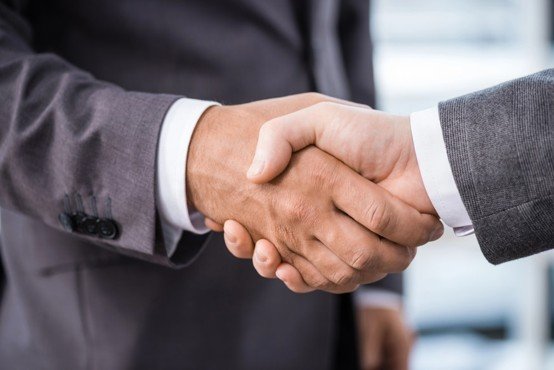
Where did the handshake come from?
Have you ever thought that sometimes it feels unsafe to see people greet you with no open hand?
Historically, the gesture of extending an open right hand was associated with showing that no weapon was being concealed. It was a simple way of demonstrating peaceful intentions. When someone showed an empty hand and greeted another person with a handshake, it became a symbol of trust, peace, and goodwill.
Although we no longer shake hands to prove that we are unarmed, the idea behind it remains surprisingly relevant:
“I come to you with good intentions.”
Handshake is a form of non-verbal communication and breaks it into eye contact, smile, grip, duration, and shakes. Most importantly, we don’t judge someone’s entire personality from a handshake. It is rather than a small component of communication and all it take just a 3-seconds.
For example, you meet a supplier’s Managing Director for the first time. You greet them by name, maintain comfortable eye contact, smile, shake hands naturally, and introduce yourself. It takes only a few seconds, but the business interaction has already started.
There are three forms of handshake in business etiquette, works, or even in daily life practically.
1) Firm Handshake – Professionalism & Confidence
The firm handshake is a form of confident and assertive, particularly suitable for professional/formal settings, while the grip should not become uncomfortably strong. Firm does not mean squeezing it hard, but the purpose is confidence and not a competition.
For example, you’re attending a networking event and someone introduces you to a potential client. A normal firm handshake should be practiced along with eye contact and a warm greeting such as “Good morning” or “Nice to meet you”.
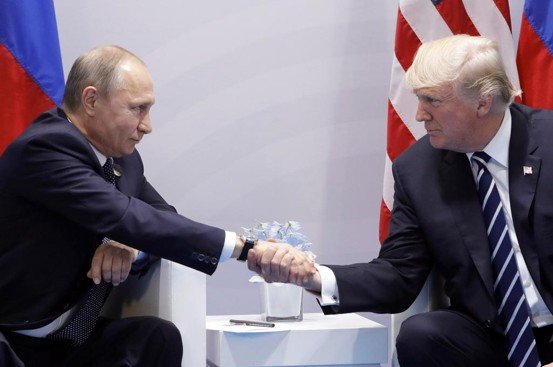
2) Palm-Down Handshake – Authority & Dominance
It describe as turning the palm downward, using a firm grip and keeping the handshake relatively short. It associates the gesture with dominance, authority and assertiveness. The first thing that you need to know is identifying who you’re dealing with; is it a manager, officer, owner or even a political leaders. Then, use the palm-down technique to “show them the power”.
For example, a sourcing officer enters an important negotiation and wants to communicate confident with the supplier for price and T&C. A sourcing officer (buyer) demonstrate the palm facing downward, symbolizing an attempt to assert control, while supplier (seller) show palm facing upward, receiving the handshake. The purpose is to show the authority and assertiveness before discussing commercial terms.
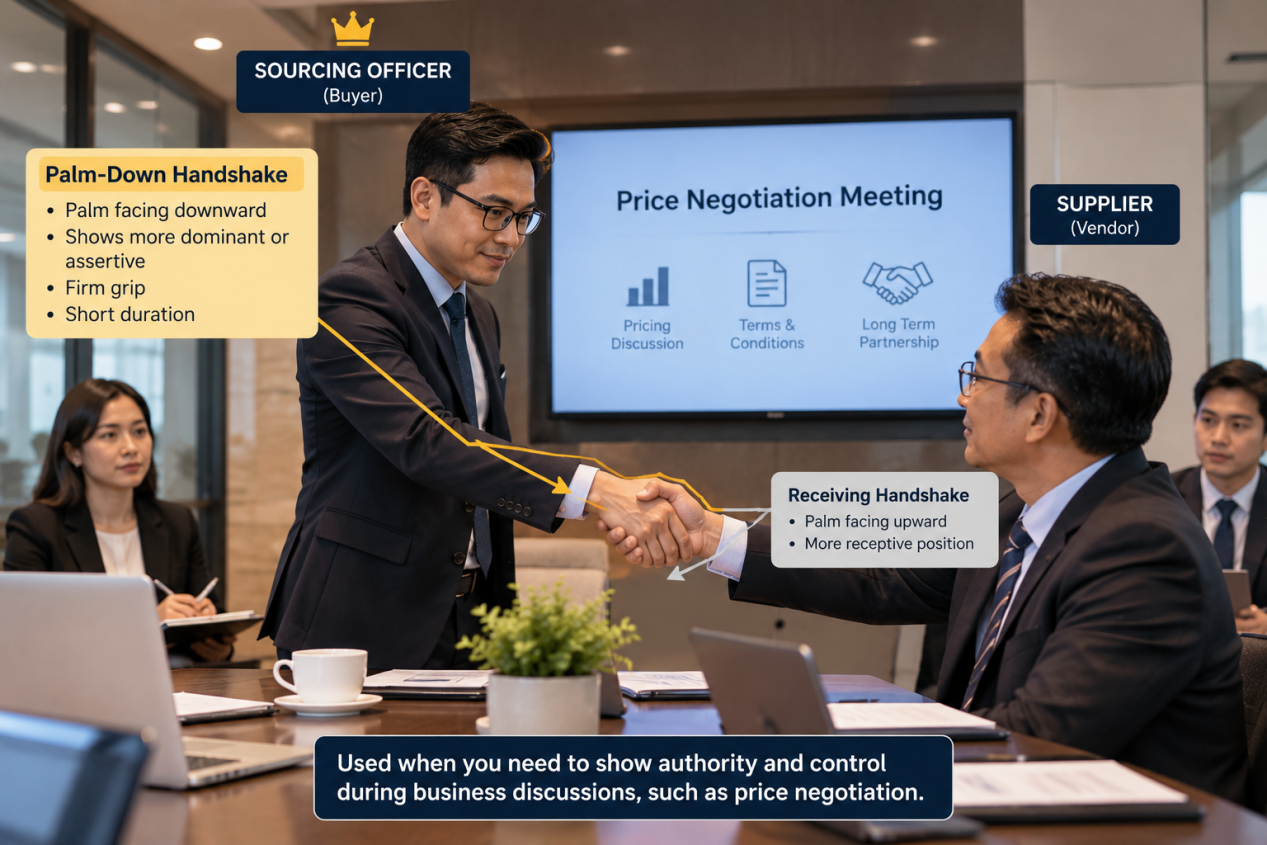
However, the gesture only signals an attempt at dominance. It does not establish who actually has greater negotiating power. That depends on factors such as supplier alternatives, market conditions, and commercial leverage.
Additionally, you may put a smile and say, “how are you”, “nice to meet you”, “good day” or “how’s your business going?”.
3) Double-Palm Handshake – Warmth, Respect & Sincerity
It portray as someone using the firm handshake followed by the other hand in addition and associates it with warmth, sincerity, gratitude, empathy, and respect.
For example, welcoming a long-standing business partner who has travelled to visit your office or congratulating a stakeholder after successfully completing a difficult project together. It can communicate more warmth than a conventional business handshake. But it needs to feel natural; using both hands with someone you have literally just met can potentially feel overly familiar or unnatural.

The key is not simply knowing how to perform a handshake, but understanding when and with whom to use it.
Although the anatomy of handshakes were explained, but in real world there’s no universal handshake due to cultural differences. The western countries generally firm, Asia would practically gentler and sometimes accompanied by a bow and Middle East would using the right hand and potentially longer duration, sometimes followed by a hug.
It is not always similar. The most important lesson is to have the cultural intelligence rather than the handshake strength.
Informal situation could also be more specific such as “Bro Handshake” and sometimes youth have their own unique handshake due to their strong relationship or close friends. There is nothing wrong with having a unique way of greeting someone, as long as both comfortable with it.

After all the main purpose of handshake is to show you “I am come with good intentions and peace” and no weapon was concealed.
In summary, all three types are well-explained; with a firm handshake can communicate confidence, a palm-down handshake can communicate dominance, and a double-palm handshake is extending the additional warmth and respect.
But the real art is not memorizing these three techniques, but rather like “Read the Room, Not the Manual”. It means understanding the person, situation, and message you want to communicate.
A handshake may last only three seconds, but trust is built on what happens after we let go.
Acknowledgement
Special thanks to Mr. Terrence J., a trainer from HRD Corp, for sharing his valuable knowledge and insights on proper handshake techniques during National Training Week (NTW). This article was inspired by the lessons I learned during his training session, which I have further elaborated through my own understanding, perspectives, and professional experiences.
Fahmie Ikhwan
Shah Alam, MY

Leave a Reply